Why are we always reacting to breakdowns instead of preventing them?
Laszlo Habensusz
Author
Why are we always reacting to breakdowns instead of preventing them?
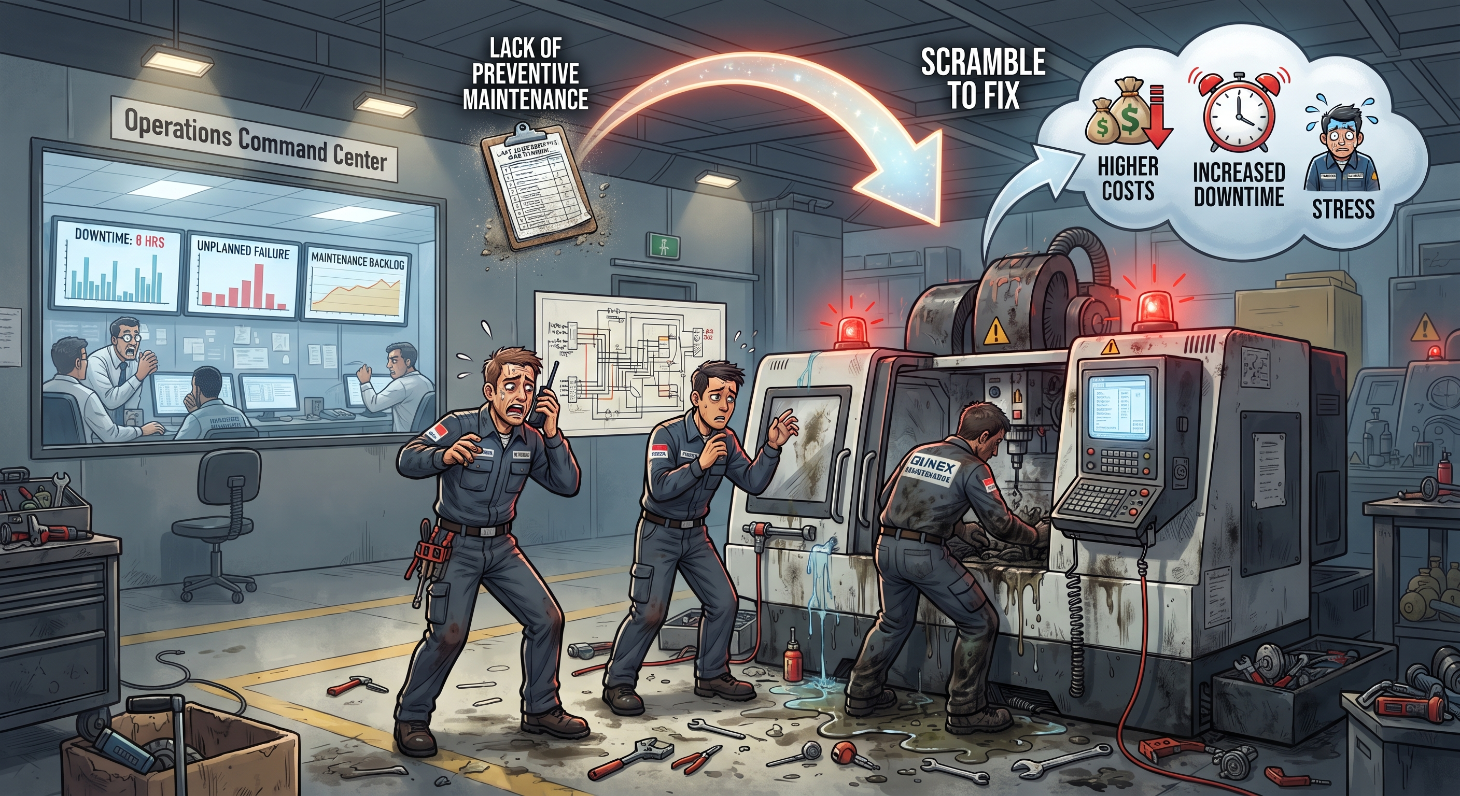
If your team is constantly scrambling to fix unexpected equipment failures, it's likely due to a lack of structured preventive maintenance, poor data tracking, and insufficient planning. Reactive maintenance, while sometimes necessary, often results from not regularly inspecting, servicing, and monitoring equipment health. This cycle leads to higher costs, increased downtime, and stress, as issues are only addressed after they've already caused a problem, rather than before.
Understanding the Reactive Maintenance Trap
Operating in a reactive mode means you're always playing catch-up. Instead of planned work that can be scheduled during off-peak hours or downtime, breakdowns force immediate, often chaotic, responses. This mode is characterized by:
- Unpredictable Downtime: Machines fail without warning, disrupting production schedules.
- Higher Costs: Emergency repairs, rush orders for parts, and overtime pay significantly increase expenses compared to planned maintenance.
- Reduced Equipment Lifespan: Minor issues escalate into major failures, shortening the overall life of your assets.
- Increased Safety Risks: Unforeseen failures can create hazardous working conditions.
- Maintenance Backlog: The constant stream of emergencies prevents proactive work, creating a never-ending cycle.
Common Causes of Excessive Reactive Maintenance
Several factors contribute to a predominantly reactive maintenance strategy:
Lack of a Formal Preventive Maintenance (PM) Program
Without a clear schedule for inspections, lubrication, and adjustments, equipment health degrades unnoticed until failure. Many small and mid-sized operations rely on "run-to-failure" because they haven't formalized a PM strategy.
Insufficient Data and Records
If you don't track what failed, when, why, and how it was fixed, you can't identify recurring problems or predict future issues. Manual logs or tribal knowledge are often inconsistent and incomplete.
Inadequate Training and Resources
Maintenance staff might lack the skills to perform detailed inspections or proactive tasks, or they might be spread too thin, leaving no time for anything but emergencies.
No Asset Register or Criticality Assessment
Not knowing which assets are most vital to your operation means you can't prioritize maintenance efforts effectively, leading to critical breakdowns having disproportionate impacts.
Steps to Shift Towards Proactive Maintenance
Moving from reactive to proactive maintenance is a journey, not a switch. Here’s how to start:
1. Identify Critical Assets
Determine which machines are essential for your core operations. Prioritize these for immediate PM implementation. A simple way to do this is to ask: "If this machine goes down, what's the immediate impact on production or safety?"
2. Develop a Basic PM Schedule
Start with manufacturer recommendations for your critical assets. Schedule routine inspections, cleaning, lubrication, and minor adjustments. Even simple daily or weekly checks can make a huge difference.
3. Standardize Workflows with Checklists
Create clear, step-by-step checklists for PM tasks. This ensures consistency, reduces errors, and helps train new team members. It also provides a record that tasks were completed.
4. Implement a Robust Tracking System
Move away from paper or spreadsheets. You need a system to log all maintenance activities, track parts usage, record asset history, and schedule future tasks. This data is crucial for identifying trends and optimizing your PM program.
5. Empower Your Team with Training
Invest in training your staff on proper PM techniques, equipment diagnostics, and the use of any new maintenance software. A skilled team is a proactive team.
The challenge with many of these steps, especially for small to mid-sized teams, is managing the sheer volume of information and scheduling manually. Juggling spreadsheets, paper work orders, and trying to remember every machine's history becomes overwhelming. This is where a system like iTenance helps. By centralizing all your asset data, maintenance schedules, work orders, and spare parts inventory in one cloud-based platform, iTenance automates much of the administrative burden. It allows you to easily schedule preventive tasks, assign them to technicians, track completion, and build a comprehensive maintenance history for every asset. This shift empowers your team to move from constantly reacting to strategically preventing breakdowns, significantly reducing downtime and operational costs.
Measuring Your Progress
Once you start implementing proactive strategies, track key performance indicators (KPIs) to measure your success:
- Downtime Reduction: Is the total time machines are out of service decreasing?
- Maintenance Costs: Are emergency repair costs going down?
- PM Compliance: Are scheduled preventive tasks being completed on time?
- Mean Time Between Failures (MTBF): Are your assets running longer between unexpected breakdowns?
By consistently monitoring these metrics, you can refine your maintenance strategy and continue to improve operational efficiency.
Frequently Asked Questions
What's the main difference between reactive and preventive maintenance?
Reactive maintenance addresses failures after they occur, leading to unplanned downtime and higher costs. Preventive maintenance involves scheduled tasks to prevent failures, aiming to keep equipment running reliably and extend its lifespan.
How do I convince my management to invest in preventive maintenance?
Focus on the financial benefits: reduced downtime means higher production, lower emergency repair costs, and extended asset life. Highlight safety improvements and better budget predictability.
Can I eliminate reactive maintenance entirely?
While the goal is to minimize it, completely eliminating reactive maintenance is unrealistic. Unexpected events can still occur. The aim is to shift the majority of your maintenance activities to a planned, proactive approach.
How long does it take to see results from a PM program?
You can often see initial improvements in critical asset uptime and reduced emergency calls within a few months. Significant shifts in overall efficiency and cost savings typically become apparent over 6-12 months as your program matures.
Tags
Laszlo Habensusz
Author
Related Posts
Why Can't I Tell Which Plant Is Really Struggling with Downtime?
Sep 21, 2026 · 6 min read
Why Do Our New Maintenance Technicians Take So Long to Get Up to Speed?
Sep 14, 2026 · 8 min read
Machine Down: Why Do We Always Find Out We're Out of Spares Mid-Repair?
Aug 16, 2026 · 7 min read
Ready to optimize your maintenance?
Start your 30-day free trial today. No credit card required, no hidden fees.